Red and near-infrared light: what the term means
Red light therapy describes exposing skin to low levels of red or near-infrared light. In dermatology and research, this approach is often called photobiomodulation. It is a non-invasive light-based approach, not a procedure that cuts, injects or chemically alters the skin. [1] [2]
It is important to separate the name from the promise. Photobiomodulation refers to research into how selected wavelengths of light may prompt biological responses in cells. That does not mean every lamp, mask or panel produces the same effect, or that every proposed use is already supported by strong clinical evidence. [1] [2]
How photobiomodulation is explained
One leading explanation is that certain cells absorb light and alter their activity, including processes associated with mitochondria. This is why discussions often mention cellular energy, circulation, inflammatory signalling or collagen. These are investigated mechanisms, not a guarantee of a visible result for every person or every at-home device. [2]
The outcome can depend on many details: wavelength, light power and dose, distance, body area, exposure time and the condition of the skin. The American Academy of Dermatology notes that studies use different devices and schedules, so their results cannot simply be compared with one another. [1]
What the evidence can currently support
Red light is being studied for a range of dermatologic questions, including the appearance of fine texture, redness, acne, scars and certain forms of hair loss. Some studies indicate potential in specific circumstances, but medical sources caution that larger, better-designed studies are still needed for most promoted uses. [1] [2]
For that reason, red light therapy is best viewed as an informed part of a skin-care routine or a conversation with a professional, rather than a universal answer. It does not make a diagnosis and does not replace dermatologic assessment, standard treatment or examination of a changing skin lesion. Sudden hair loss, a rash or a changing mole deserves professional assessment first. [1] [2]
It is not UV exposure, and it is not an infrared sauna
Ultraviolet radiation belongs to a different part of the spectrum than red and near-infrared light. WHO defines UV as 100 to 400 nm, and links UVB and UVA with sunburn, skin ageing and increased skin-cancer risk. Red light therapy does not use UV light, so it is not a tanning bed and is not intended to tan the skin. [1] [3]
An infrared sauna has a different purpose, too. Its lamps create penetrating warmth, encourage sweating and increase the body’s heat load; Cleveland Clinic describes typical temperatures of roughly 43 to 57 °C. By contrast, photobiomodulation is often described as non-thermal LED or laser light therapy. Both categories may use the word infrared, but the experience, dose and precautions are not interchangeable. [2] [4]
Choose a format with realistic expectations
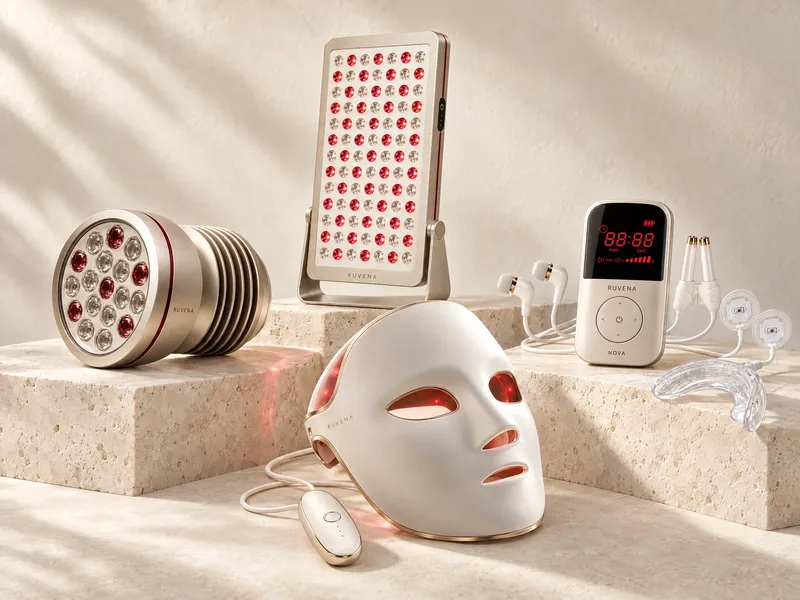
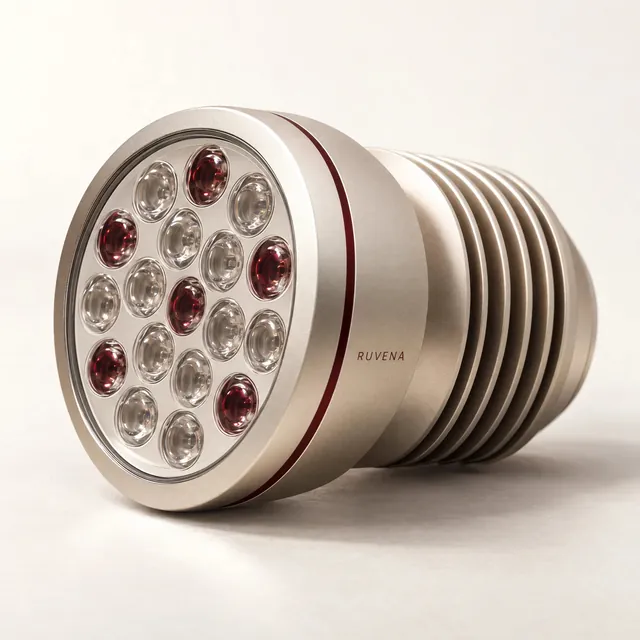
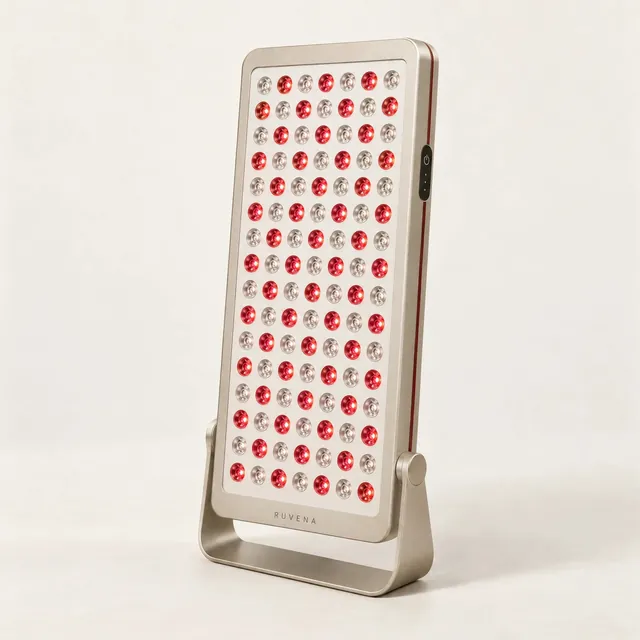
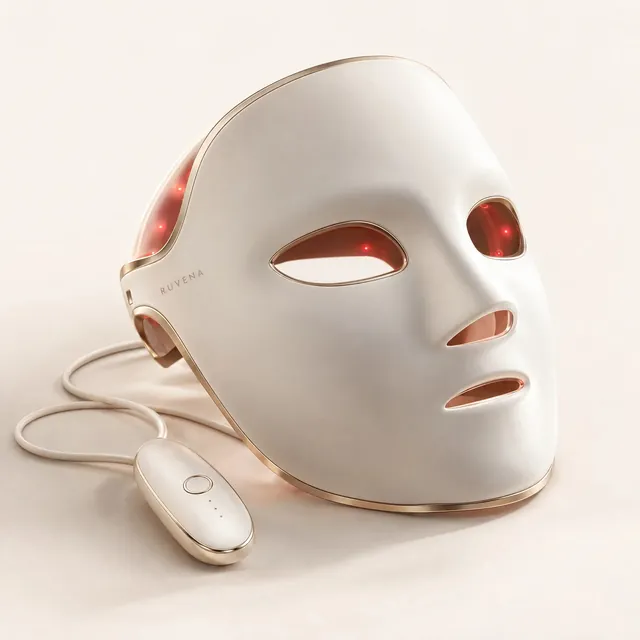
In the RUVENA range, Focus is a compact lamp, Balance is a panel and Aura is a mask. These formats suit different ways of using light: targeting a smaller area, covering a broader area or fitting a facial routine. Format selection is not a medical diagnosis and does not by itself establish a clinical result.
Start by reading the instructions for the specific product, rather than assuming that a protocol from another device applies. Medical sources advise caution with light-sensitive conditions and medicines that increase photosensitivity, and eye protection when the manufacturer directs it. If you have a skin condition, eye concerns, take medication or are unsure whether light exposure is suitable for you, speak with a dermatologist or other qualified healthcare professional. [1] [2]
Sources
Find your light ritual.
Face care, a targeted area or a little more space? A few simple questions help you find the device that fits your everyday life.
- Five short questions
- Clear reasons for your match
- All four RUVENA devices